# wordpress-export-to-markdown
Converts a WordPress export file into Markdown files that are compatible with static site generators ([Eleventy](https://www.11ty.dev/), [Gatsby](https://www.gatsbyjs.org/), [Hugo](https://gohugo.io/), etc.).
Each post is saved as a separate Markdown file with frontmatter. Images are also downloaded and saved. Embedded content from YouTube, Twitter, CodePen, etc. is carefully preserved.
## Quick Start
You'll need:
- [Node.js](https://nodejs.org/) installed
- Your [WordPress export file](https://wordpress.org/support/article/tools-export-screen/) (be sure to export "All content").
To make things easier, you can rename your WordPress export file to `export.xml` and drop it into the same directory that you run this script from.
You can run this script immediately in your terminal with `npx`:
```
npx wordpress-export-to-markdown
```
Or you can clone this repo, then from within the repo's directory, install and run:
```
npm install && node index.js
```
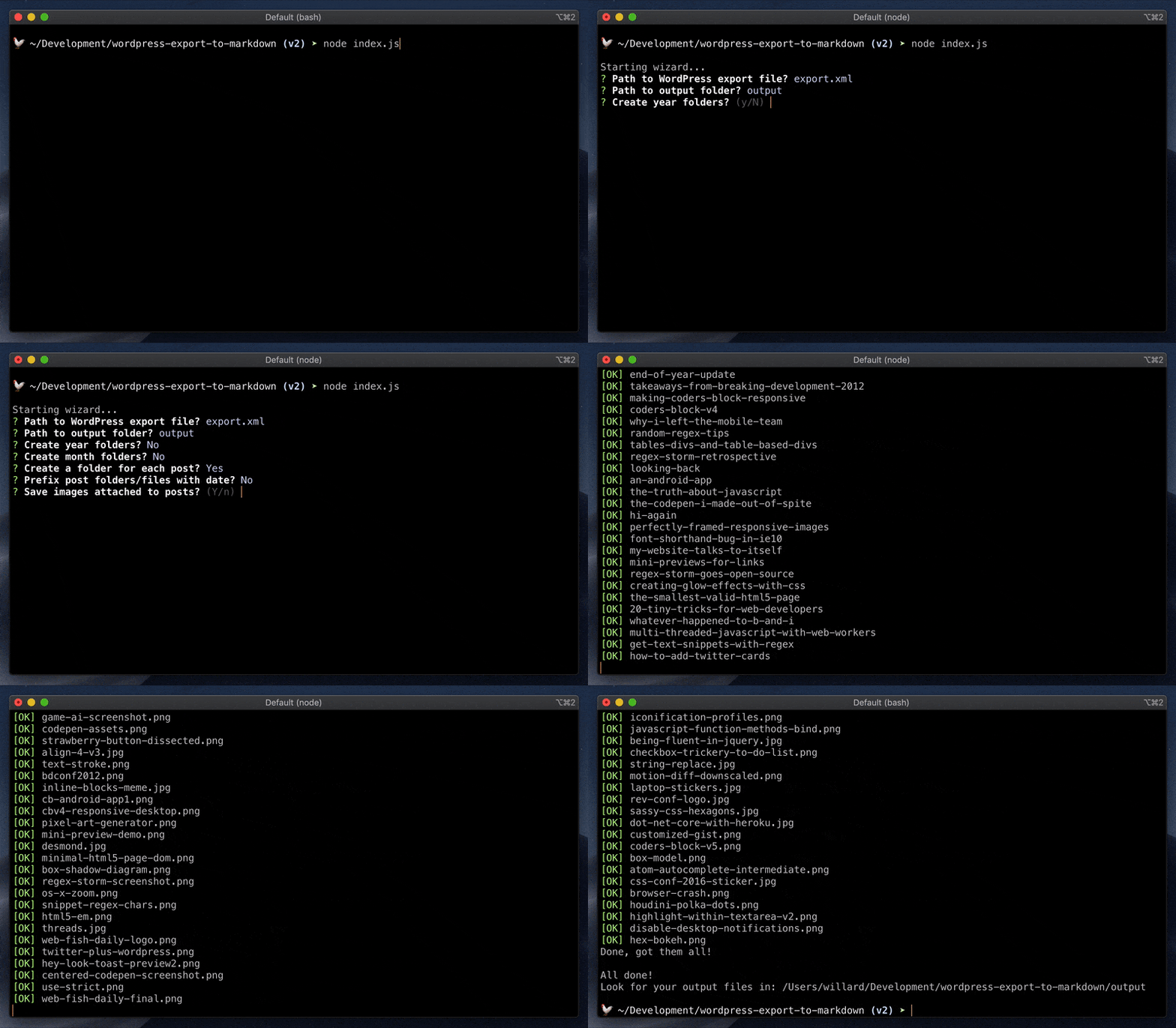
Either way, the script will start a wizard to configure your options. Answer the questions and off you go!
## Command Line
Options can also be configured via the command line. The wizard will skip asking about any such options. For example, the following will give you [Jekyll](https://jekyllrb.com/)-style output in terms of folder structure and filenames.
Using `npx`:
```
npx wordpress-export-to-markdown --post-folders=false --prefix-date=true
```
Using a locally cloned repo:
```
node index.js --post-folders=false --prefix-date=true
```
The wizard will still ask you about any options not specified on the command line. To skip the wizard entirely and use default values for unspecified options, add `--wizard=false`.
## Options
### Use wizard?
- Argument: `--wizard`
- Type: `boolean`
- Default: `true`
Enable to have the script prompt you for each option. Disable to skip the wizard and use default values for any options not specified via the command line.
### Path to WordPress export file?
- Argument: `--input`
- Type: `file` (as a path string)
- Default: `export.xml`
The path to the WordPress export file that you want to parse. It is recommended that you drop your WordPress export file into the same directory that you run this script from so it's easy to find.
### Path to output folder?
- Argument: `--output`
- Type: `folder` (as a path string)
- Default: `output`
The path to the output directory where Markdown and image files will be saved. If it does not exist, it will be created for you.
### Create year folders?
- Argument: `--year-folders`
- Type: `boolean`
- Default: `false`
Whether or not to organize output files into folders by year.
### Create month folders?
- Argument: `--month-folders`
- Type: `boolean`
- Default: `false`
Whether or not to organize output files into folders by month. You'll probably want to combine this with `--year-folders` to organize files by year then month.
### Create a folder for each post?
- Argument: `--post-folders`
- Type: `boolean`
- Default: `true`
Whether or not to save files and images into post folders.
If `true`, the post slug is used for the folder name and the post's Markdown file is named `index.md`. Each post folder will have its own `/images` folder.
/first-post
/images
potato.png
index.md
/second-post
/images
carrot.jpg
celery.jpg
index.md
If `false`, the post slug is used to name the post's Markdown file. These files will be side-by-side and images will go into a shared `/images` folder.
/images
carrot.jpg
celery.jpg
potato.png
first-post.md
second-post.md
Either way, this can be combined with with `--year-folders` and `--month-folders`, in which case the above output will be organized under the appropriate year and month folders.
### Prefix post folders/files with date?
- Argument: `--prefix-date`
- Type: `boolean`
- Default: `false`
Whether or not to prepend the post date to the post slug when naming a post's folder or file.
If `--post-folders` is `true`, this affects the folder.
/2019-10-14-first-post
index.md
/2019-10-23-second-post
index.md
If `--post-folders` is `false`, this affects the file.
2019-10-14-first-post.md
2019-10-23-second-post.md
### Save images attached to posts?
- Argument: `--save-attached-images`
- Type: `boolean`
- Default: `true`
Whether or not to download and save images attached to posts. Generally speaking, these are images that were uploaded by using **Add Media** or **Set Featured Image** when editing a post in WordPress. Images are saved into `/images`.
### Save images scraped from post body content?
- Argument: `--save-scraped-images`
- Type: `boolean`
- Default: `true`
Whether or not to download and save images scraped from `![]() ` tags in post body content. Images are saved into `/images`. The `
` tags in post body content. Images are saved into `/images`. The `![]() ` tags are updated to point to where the images are saved.
### Include custom post types and pages?
- Argument: `--include-other-types`
- Type: `boolean`
- Default: `false`
Some WordPress sites make use of a `"page"` post type and/or custom post types. Set this to `true` to include these post types in the results. Posts will be organized into post type folders.
## Advanced Settings
You can edit [settings.js](https://github.com/lonekorean/wordpress-export-to-markdown/blob/master/src/settings.js) to tweak advanced settings. This includes things like customizing frontmatter fields and throttling image downloads.
You'll need to run the script locally (not using `npx`) to make use of advanced settings.
` tags are updated to point to where the images are saved.
### Include custom post types and pages?
- Argument: `--include-other-types`
- Type: `boolean`
- Default: `false`
Some WordPress sites make use of a `"page"` post type and/or custom post types. Set this to `true` to include these post types in the results. Posts will be organized into post type folders.
## Advanced Settings
You can edit [settings.js](https://github.com/lonekorean/wordpress-export-to-markdown/blob/master/src/settings.js) to tweak advanced settings. This includes things like customizing frontmatter fields and throttling image downloads.
You'll need to run the script locally (not using `npx`) to make use of advanced settings.